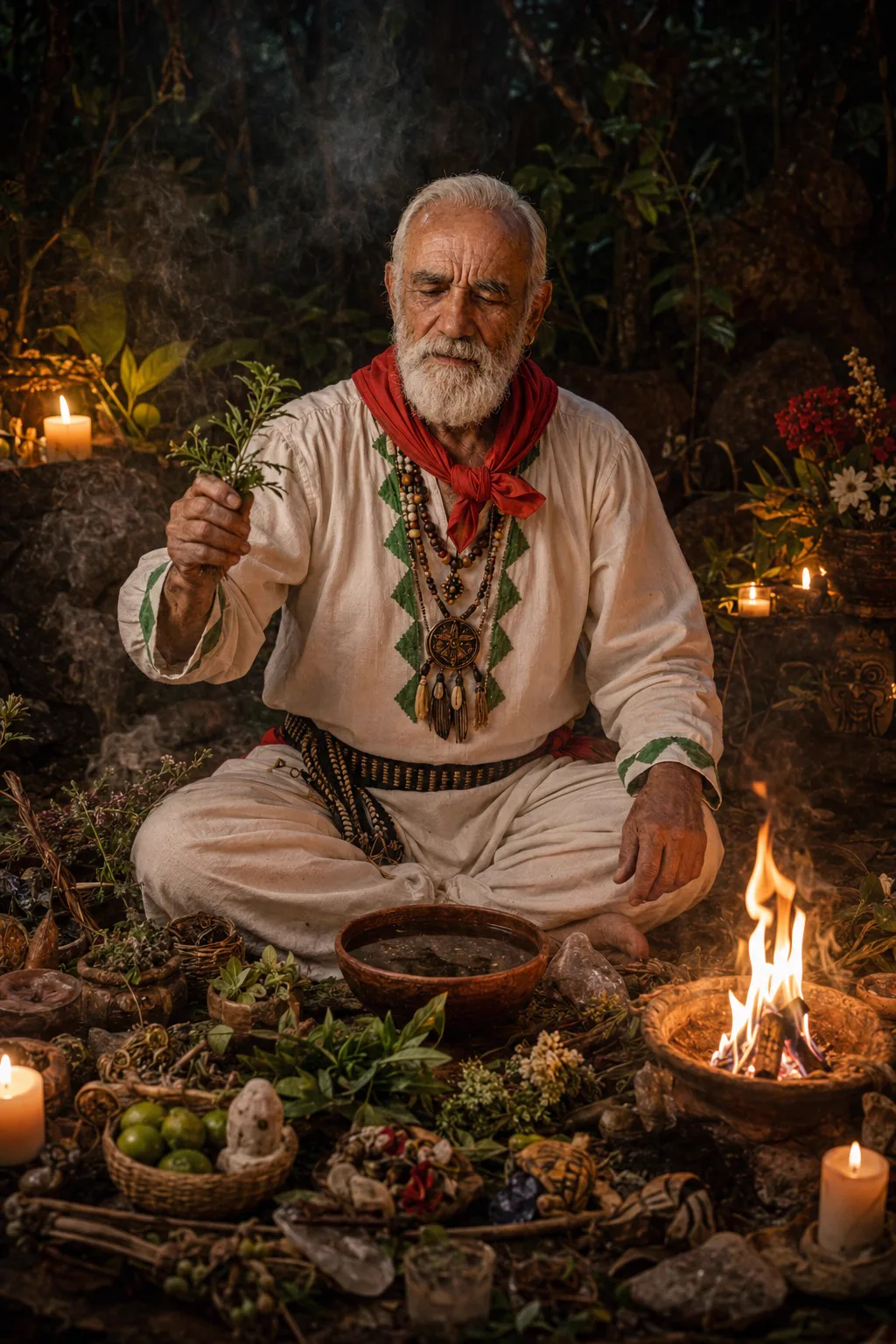
From Catemaco to Los Angeles
Don Jacinto Nahual was born in Catemaco, Veracruz, the town known across Latin America as the center of the Mexican curandero tradition. He grew up inside the practices that region has passed down for generations: cleansings with herbs, the old prayers, laying on of hands, reading the candle. Four generations of his family did this work before him.
He later brought the practice to Los Angeles, where he sees the Hispanic community of Southern California, and increasingly people who did not grow up with any of this and simply ran out of other doors. What he does is not learned from books or courses. It is learned at a table, from someone who learned it at a table.
Over thirty years of it
In three decades he has seen most of the stories there are: people who feel something invisible blocking them, couples living a distance neither can explain, families carrying an illness medicine cannot name, people who only want a little peace.
He does not apply the same formula to everyone. He listens first, reads second, and if he thinks the tradition can help you he says so. If he thinks what you need is a doctor, a therapist or a lawyer, he says that too, on the first call, before you have paid anyone anything.
How he works
The method is the Catemaco method: fresh herbs, prayer, holy water, copal, candles, laying on of hands and, depending on the case, the egg. No modern gadgets, no invented rituals, nothing borrowed from other traditions and sold as his own. It is the tradition as it was handed to him.
Price, process and number of sessions are stated at the start. A first cleansing is $97 and runs about an hour; three sessions is the usual course and heavy cases can run to nine. That is said before, not after, because the tab that climbs "because the energy is heavy" is how much of this trade makes its money, and it is why people distrust all of us.
What he does not promise
He works from a spiritual tradition, not from medicine. He does not diagnose illness, does not guarantee cures and does not promise specific results. His work sits alongside doctors and therapists and never replaces them. If you are in a medical, psychological or emotional crisis, the responsible thing is professional help first and a consultation second.
He is not a santero or a babalawo, and will tell you if what you need is one. What he offers is an honest reading of whether the Catemaco tradition can help, and if it can, the work done seriously, the way it was passed down.